Creating Low Sensory, High Performance Work Environments
A free workbook for managers
A practical, research-informed guide to help managers support neurodivergent teams with confidence, clarity, and compassion.
What Managers Will Learn
This workbook is designed to help leaders create workplaces where everyone not just neurodivergent employees can thrive.
➤ build environments that encourage focus, wellbeing, and performance
➤ recognise sensory pressures in the workplace
➤ reduce overwhelm and cognitive load
➤ communicate with clarity
➤ support neurodivergent employees with confidence
Why Sensory-Safe Workplaces Matter
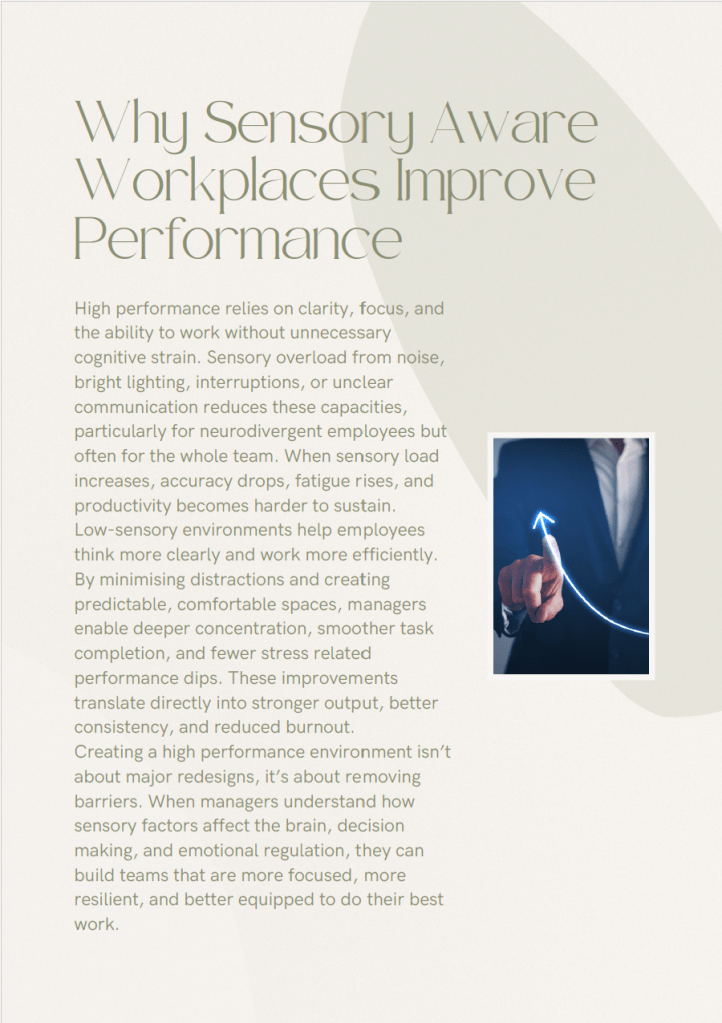
A significant number of employees experience sensory sensitivities, even if they have never disclosed a diagnosis. For neurodivergent staff, everyday workplace factors—noise, lighting, interruptions, communication styles—can create unnecessary stress that impacts wellbeing and performance.
When managers understand and reduce these pressures, teams become more focused, creative, and resilient. This workbook shows you how to do exactly that in a practical, achievable way.
Inside the Workbook
✔ Sensory-safe workspace design
Practical ways to reduce overwhelm and support focus.
✔ Communication that works
Clear, respectful strategies for interacting with neurodivergent team members.
✔ Supporting cognitive load
Simple adjustments that prevent burnout and increase productivity.
✔ Building inclusive team culture
Approaches to encourage psychological safety, trust, and belonging.
✔ Manager checklists & reflection prompts
Tools you can use immediately in your daily leadership practice.
About the Author
Jodie Steele is the Co-Founder of Neurotalks, bringing both lived experience and organisational insight to her work in creating low sensory, high performance environments. For years, Jodie built a successful, fast-paced career while unknowingly navigating the challenges of neurodivergence. She excelled professionally, but the relentless sensory demands, pressure to mask, and lack of workplace understanding slowly pushed her towards burnout.
Eventually, the combination of sensory overload, chronic stress, and unmet support needs led to a complete crash physically, emotionally, and professionally. Jodie’s experience of “falling apart in plain sight” became a turning point. It revealed how many organisations unintentionally create environments that make high performance unsustainable, especially for neurodivergent employees. This clarity ignited her commitment to help others avoid the same path by empowering managers to recognise and reduce sensory strain before it becomes damaging.
Jodie wrote this workbook to support leaders in building workplaces where people don’t have to choose between success and wellbeing. Her goal is to give managers the tools she wished had existed clear, compassionate, practical strategies that reduce overwhelm, strengthen communication, and make high performance sustainable. Through this guide, she hopes to help teams thrive without burning out, and to create cultures where neurodivergent employees can flourish without compromising who they are.