
Experience.
Insight. Real
Change.
Jodie Steele is a keynote speaker, consultant and workshop facilitator specialising in neuroinclusion, communication, leadership and performance.
With more than 23 years of commercial experience advising 12,000+ organisations across the UK and international markets, Jodie brings a rare combination of lived experience and commercial insight to help organisations create environments where people and performance thrive together.
Let’s Start a Conversation
Experience Built in the Real World
Long before founding Neurotalks, Jodie Steele built a career helping organisations solve commercial challenges, strengthen relationships and improve performance.
Over a 23+ year professional career, she has advised more than 12,000 organisations across the UK and international markets, working with SMEs, national organisations and multinational businesses, including experience within FTSE 100 environments and alongside Fortune 500 companies.
Her career has spanned technology, telecommunications, media, hospitality, tourism, events and business development, giving her first hand experience of how organisations operate under pressure, how leaders make decisions and how closely communication, culture and performance are connected.
Across very different industries, Jodie repeatedly saw the same pattern: capable people were often expected to adapt to systems, communication styles and working environments that were not designed with them in mind.
On paper, organisations could appear inclusive, well structured and performance focused. In reality, unclear expectations, inflexible processes, poor communication and unrecognised differences in how people think and work were often creating avoidable pressure, disengagement and burnout.
Years later, after experiencing burnout and understanding her own neurodivergence, Jodie was able to see those patterns through a new lens.
This combination of commercial experience and lived understanding now shapes her work through Neurotalks. Her approach is not based solely on theory or personal experience. It is grounded in decades spent working with organisations, understanding commercial pressures and seeing first hand what helps people and performance succeed together.

Awareness Is Only the Beginning
Neurotalks exists because awareness on its own doesn’t create better workplaces.
For years, organisations have invested in understanding neurodiversity, wellbeing and inclusion. Yet many leaders still lack the confidence, practical tools and organisational understanding needed to turn that awareness into meaningful change.
After more than 23 years working inside commercial environments and later experiencing burnout and discovering her own neurodivergence, Jodie recognised the gap between good intentions and everyday reality.
She had seen capable people struggle in systems that unintentionally created unnecessary barriers. She had also seen organisations achieve remarkable results when leaders understood how to create environments where different people could think, communicate and perform at their best.
Neurotalks was created to bridge that gap.
Today, every keynote, workshop and consultancy project is designed to help organisations move beyond awareness and create practical, sustainable change that benefits both people and performance.
The Four A’s of
Inclusive Performance™
The Neurotalks framework helps organisations move from awareness to practical change that improves communication, leadership and team performance.
Awareness
Hover to explore
Awareness
Understanding the diverse ways people think, feel, communicate and process their environment.
Awareness builds the foundation for empathy, reduces assumptions and opens the door to meaningful neuroinclusion.
Accessibility
Hover to explore
Accessibility
Creating environments, systems and communication styles that reduce sensory, cognitive and social barriers.
Accessibility ensures that all individuals can engage, participate and perform without unnecessary overwhelm.
Adjustment
Hover to explore
Adjustment
Providing personalised, practical changes that support individual needs, from flexible communication to sensory considerations and workload clarity.
Great adjustments do not just help individuals, they enhance team performance and wellbeing.
Alignment
Hover to explore
Alignment
Bringing policies, leadership behaviours and workplace culture into alignment with inclusive values.
Alignment ensures that awareness and adjustments translate into sustainable, systemic change.
Together, the Four A’s turn understanding into action and action into sustainable performance.
Commercially Grounded.
Deeply Human.
What makes the work different is the combination of lived experience, commercial credibility, stage presence and strategic insight.
Lived Experience
Honest, nuanced and deeply relevant to the realities of modern workplaces.
Commercial Credibility
Built over decades in high pressure, results driven environments.
Communication
Stage presence developed through live events, presenting, hosting and executive facing roles.
Strategic Insight
Connecting inclusion, leadership, wellbeing and performance rather than treating them as separate conversations.
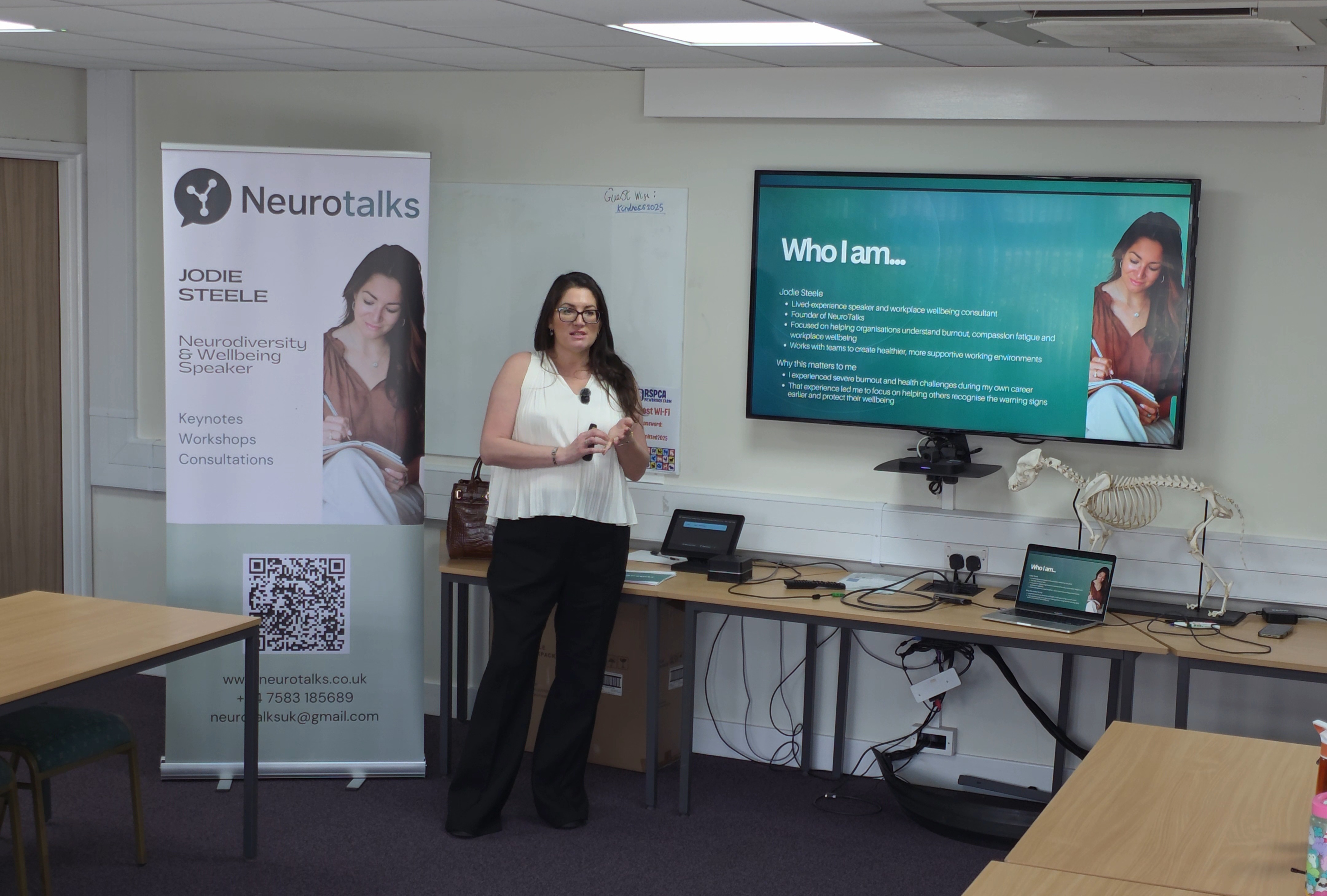
This means Jodie can speak to a room in a way that is emotionally resonant, commercially intelligent and practically useful.
Neurotalks does not deliver abstract awareness talks. The work helps leaders and teams understand what meaningful inclusion looks like in real environments, under real pressure, with real people.
Let’s start the conversation…
Whether you’re exploring a keynote, workshop or longer term partnership, let’s talk about how Neurotalks can support your people and performance goals.
