
Tag: work-performance
-
What sensory overload feels like at work, and what helps
By the time people can see I’m overloaded, I’ve usually been managing it for a while. Following a recent workplace talk in London, I share what sensory overload feels like for me, how I protect my energy and what managers can do to help before it builds.
-

Beyond “Just Ask”: Making Workplace Support Easier to Access
An open offer of help can still be difficult to act on. Explore practical ways managers can make support easier to access through clearer questions, shared priorities and thoughtful follow-up.
-
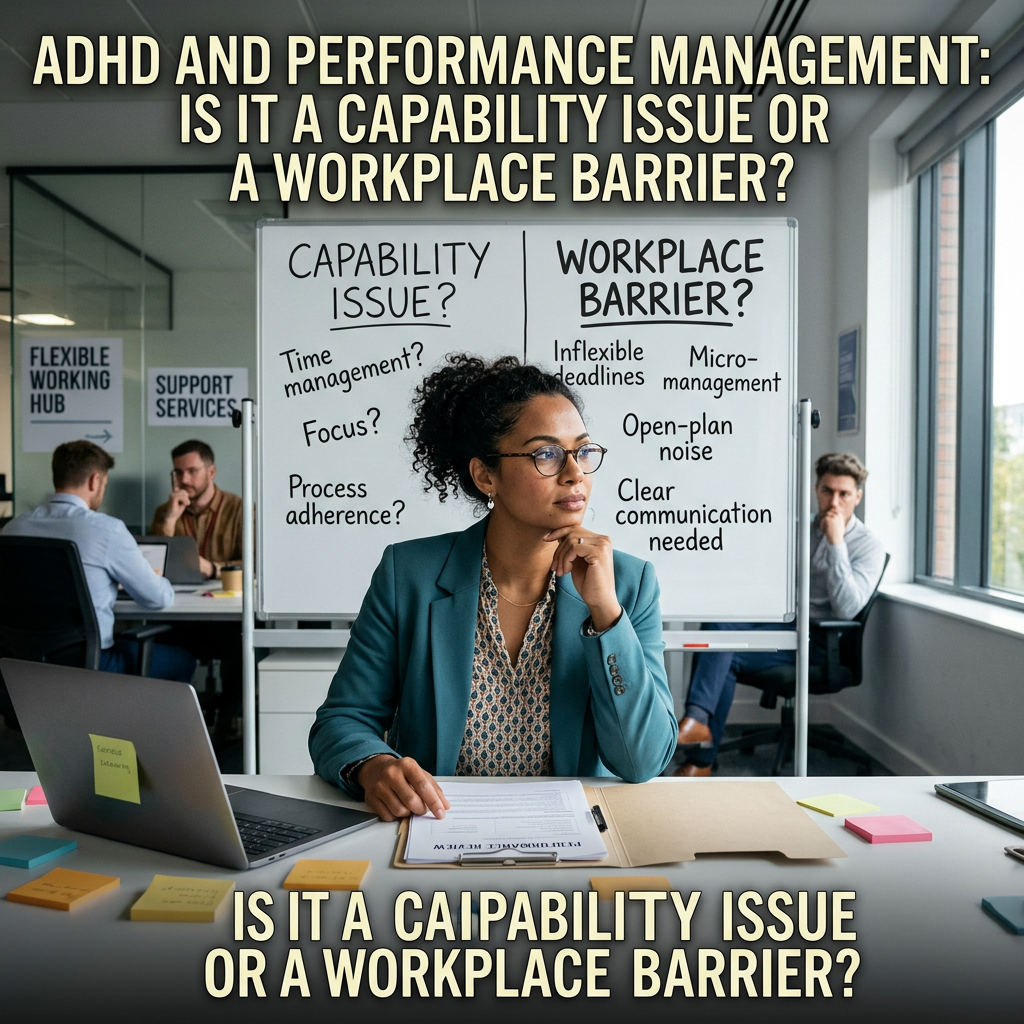
ADHD and Performance Management: Is It a Capability Issue or a Workplace Barrier?
When performance changes, the quickest explanation is not always the right one. This practical guide helps managers explore clarity, workload, environment and support before deciding what action is needed.
-

ADHD at Work: Why Awareness Must Lead to Action
ADHD awareness can start an important conversation—but meaningful inclusion requires action. Explore how ADHD can affect communication, workload and performance at work, and the practical changes managers and organisations can make to help people thrive.
-

Neurotalks receives Highly Commended recognition at Staffordshire University’s Alumni Awards
Neurotalks founder Jodie Steele reflects on being named Highly Commended at the Staffordshire University Business Awards—and what the recognition means for a growing neuroinclusion business.
-

Supporting Neurodivergent Employees Before Diagnosis or Disclosure
—
by
in adhd, ADHD at Work, autism, Autism at Work, Employee Disclosure, health, jodie-steele, Line Manager Training, mental-health, nclusive Leadership, neurodivergent, Neurodivergent Employees, neurodiversity, neuroinclusive, Neuroinclusive Workplace, neurotalks, psychological safety, sustainable performance, work-performance, Workplace InclusionMany organisations wait for disclosure before offering support. Proactive neuroinclusive management removes barriers before employees reach crisis point.
-

Why Psychological Safety Is a Performance Strategy, Not a Wellbeing Initiative
Psychological safety isn’t just a wellbeing issue. Discover how inclusive leadership improves decision making, communication, and sustainable performance at work.
-

When High Performers Burn Out Quietly
Cognitive overload and burnout are rising across organisations. Learn how inclusive leadership reduces risk and supports sustainable performance.
-

The Hidden Cost of “Always Being Available” Culture, and Why It’s Breaking Your Best People
Many workplaces pride themselves on being fast, responsive, and adaptable, but beneath that sits an unspoken expectation that is quietly burning out even the strongest performers: You must always be reachable, always responsive, always “on.” This pressure has a direct impact on cognitive load, emotional wellbeing, and the sustainability of performance, particularly for neurodivergent employees…
-

Why Good Intentions Aren’t Enough: The Hidden Barriers Neurodivergent Employees Still Face
Emotional load in communication costs teams time, energy, and trust. Here’s how unreturned messages, unclear expectations, and communication anxiety impact performance and what leaders can do to fix it.